




































Updated on June 11, 2026
It highlights a central and complex debate in Indian politics. The transition of voter sentiment between the Congress-led UPA and the BJP-led NDA highlights how public dissatisfaction often shifts based on the distinct challenges each government faces.
The assessment of Dr. Manmohan Singh’s tenure as Prime Minister (2004–2014) remains a heavily debated subject with two deeply contrasting narratives.
Perspective 1: The Dual-Power Model and the “Puppet” Criticisms
Critics, particularly political opponents, frequently argued that Dr. Singh lacked absolute executive authority.
- The Sonia Gandhi Factor: Because Sonia Gandhi held the position of Congress President and Chairperson of the National Advisory Council (NAC), critics maintained that the real political power rested with her, leaving Dr. Singh to manage administrative duties without full political autonomy.
- The “Policy Paralysis” and Scandals: During the UPA-2 regime, a series of high-profile corruption allegations (such as the 2G spectrum and Coal allocation cases) led to widespread public anger. Critics pointed to his characteristic silence as a sign of weakness or an inability to rein in coalition partners, which ultimately catalyzed the political shift toward the NDA in 2014.
Perspective 2: The Technocrat and Policy Architect
Supporters and economic historians view his legacy through a very different lens, emphasizing his immense contributions as an economist-statesman.
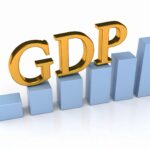
- Economic Growth: Under his leadership, India experienced some of its highest sustained GDP growth rates, averaging around 7.5%. His policies focused on balancing market liberalization with massive social welfare schemes, such as MGNREGA (rural employment guarantee) and the Right to Education Act.
- Decisive Global Leadership: Proponents argue he was entirely capable of standing his ground when it mattered most. The defining example is the 2008 Indo-US Civil Nuclear Deal, where he risked the survival of his own coalition government, staring down opposition from both the Left parties and the opposition to secure the agreement.
