












































For decades, Chandigarh held a reputation as India’s orderly, peaceful “City Beautiful.” However, the last two to three years have seen a unsettling shift. The quiet, tree-lined sectors have increasingly made headlines for organized crime, gang rivalries, brazen daylight violence, and intricate white-collar scams.
The changing landscape of public safety in Chandigarh unfolds through notable headlines spanning from late 2024 to mid-2026.
December 2024: The Disputed Surge in Law Enforcement Records
In late 2024, the National Crime Records Bureau (NCRB) published its annual report, sending shockwaves through the local administration by listing Chandigarh at the top of the country for cases registered against police personnel (a staggering 4,069 cases).
The Turning Point: Chandigarh Police strongly disputed the figure as an erroneous typo, clarifying that the number inadvertently reflected the total overall criminal cases registered in the city for the year, rather than offenses by the police themselves.
While the exact categorizations were debated, the clerical mishap inadvertently brought to light a larger reality: overall crime registration numbers were steadily climbing, and the city’s legal machinery was under unprecedented pressure.
December 2025: The Sector 26 Timber Market Gang War
The undercurrent of inter-state gang rivalry broke completely into the open on December 1, 2025. In the bustling Timber Market of Sector 26, associates linked to the notorious Lawrence Bishnoi gang gunned down Inderpreet Singh, alias Parry, in broad daylight.
The attackers utilized a stolen vehicle and fled the scene, with the gang subsequently claiming responsibility for the hit on social media. Though law enforcement mobilized quickly—deploying special teams and arresting multiple suspects in Punjab and Haryana—this incident starkly illustrated how regional gang networks were comfortably operating within Chandigarh’s borders.
June 2026: The Sector 11 Pharmacy Shootout
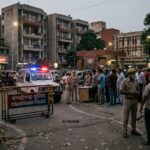
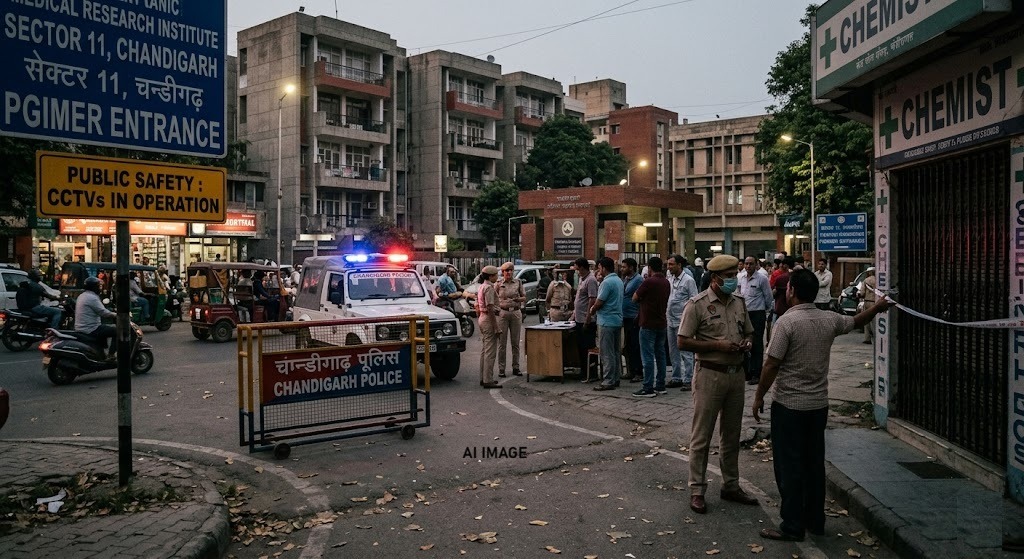
The escalation of gun violence peaked in mid-2026, shattering the peace of one of the city’s busiest commercial and medical hubs. On June 13, 2026, two masked men walked into a chemist shop in Sector 11, adjacent to the prestigious PGIMER hospital complex, and fired 13 rounds at a 45-year-old pharmacy cashier, Janki Das, killing him instantly at the counter.
[Incident: Sector 11 Chemist Shop Shooting]
       │
       ├── Weapon Identified: Turkish-made Zigana 9mm pistol (estimated market value ~Rs 8 lakh)
       │
       └── Suspects Traced: A three-man hit squad originating from Rajouri, Jammu & Kashmir
The audacity of a daylight assassination in a congested market sparked intense public outcry and protests from local traders. Investigators later discovered that the hitmen had checked into a hotel in Kajheri using their real Aadhaar cards just a day prior, signaling a total lack of fear of local police intelligence. The weapon used—a high-end Turkish Zigana pistol—pointed directly to sophisticated cross-border illegal arms networks.
The Anatomy of the Crime Shift
The nature of crimes over the 2024–2026 period indicates a multi-layered transition:
- Street Violence vs. Gang Footprints: While minor stabbings and mobile-snatching incidents remain frequent in peripheral areas like Ram Darbar, high-profile hits in upscale sectors (like Sector 9 and Sector 11) show that organized networks are targeting businesses.
- The Transit Hub Vulnerability: As Chandigarh borders Punjab, Haryana, and lies en route to Himachal Pradesh and Jammu & Kashmir, criminals routinely exploit the porous borders to execute crimes and quickly retreat into neighboring jurisdictions.
- Cyber and Financial Fraud: Concurrently, local cyber cells have noted a sharp spike in digital impersonation and financial cheating cases, with everyday citizens losing lakhs to remote scammers.
The evolving data suggests that maintaining Chandigarh’s historic safety record will require the administration to move away from static check-posts and shift aggressively toward active ground patrolling, stricter verification of transit accommodations, and real-time inter-state intelligence sharing.
To better understand the ground-level impact and view regional report footage covering the rising anxieties of local residents, you can watch this report on Punjab and Chandigarh crime dynamics. This video provides crucial visual context on the public outrage and the challenges currently faced by local law enforcement regarding public safety.
