

















































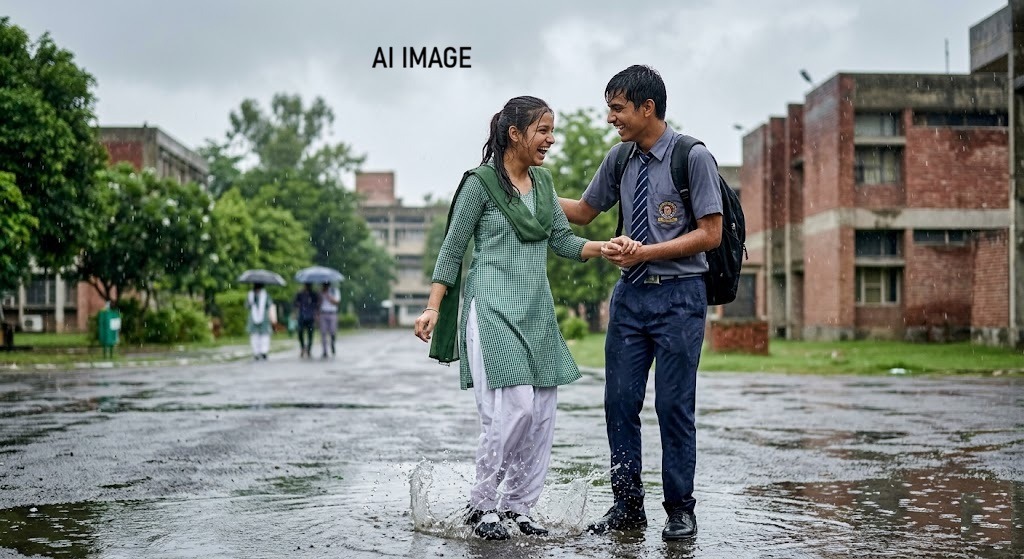

A rainy day often brings a sense of joy and relief, but when school-going children are spotted playing in the streets or parks during school hours, that innocence quickly fades into a cause for concern. While splashing in puddles might seem like harmless fun, doing so during vital instructional time points to a deeper, more systemic issue.
These children are not just getting wet; they are washing away hours of precious educational foundation. Addressing this growing trend of truancy requires an honest look at where the safety nets are failing—specifically, the dual negligence of both educational institutions and parents.
The Cost of Lost Time
The school years are the most critical period for cognitive and social development. When students routinely skip classes to loiter or play, the consequences extend far beyond a single missed lecture:
- Academic Decay: Education is cumulative. Missing fundamental concepts leaves gaps in knowledge that become increasingly difficult to bridge as the curriculum advances.
- Erosion of Discipline: School is not just about textbooks; it teaches routine, commitment, and accountability. Bunking school fosters a habit of evasion that can bleed into their future professional and personal lives.
- Safety Risks: Unsupervised children wandering during school hours are vulnerable to accidents, negative peer influences, and hazardous weather conditions.
Identifying the Negligence
When a child is outside playing in the rain at 11:00 AM on a Tuesday, the system has failed them on two fronts.
Institutional Negligence and a Tragic Precedent
Schools act as in loco parentis (in the place of a parent) during the day. If a student can easily slip out of the gates or fail to show up without anyone noticing, the school’s administrative protocols are deeply flawed. A lack of secure perimeters, unmonitored exits, and delayed attendance reporting allow this behavior to thrive.
Furthermore, the physical safety and infrastructure of the school during adverse weather is a critical administrative responsibility. A sobering reminder of institutional failure is the July 2022 tragedy at Carmel Convent School in Chandigarh. After heavy rainfall lashed the city, a 250-year-old heritage tree collapsed on students who were forced to eat lunch outside, killing a 16-year-old girl and grievously injuring several others. The administration and school were heavily criticized and legally penalized for their negligence in tree maintenance and for failing to provide a safe, indoor dining shelter. If students can fall victim to weather-related hazards inside a negligent school campus, children wandering the streets unsupervised in the rain are at an unimaginably high risk of accidents.
Parental Negligence
While parents cannot physically sit with their children in class, their responsibility does not end at the school gate. A lack of daily communication, failure to review school work, and ignoring attendance reports create a blind spot. Often, parents are unaware of their child’s whereabouts simply because they do not ask the right questions or maintain an active dialogue with the school administration.
Collaborative Solutions: Correcting the Course
Fixing this issue requires a united front. Schools and parents must stop assigning blame and start building a tighter safety net.
What Schools Must Do
- Strict Campus Security: Implement monitored exit points and require verifiable passes for any student leaving the premises during school hours.
- Infrastructure Audits: Regularly inspect school grounds, especially before and during the monsoon season, to remove hazards like unstable trees or unsafe structures, ensuring students have secure indoor spaces during extreme weather.
- Real-Time Attendance Tracking: Utilize digital attendance systems that instantly send an SMS or automated call to parents if a child is marked absent for the first period.
- Engaging Environments: Address why students want to leave. Incorporate interactive learning, adequate breaks, and physical education so students don’t feel the need to escape the campus to enjoy the weather.
What Parents Must Do
- Active Verification: Do not rely solely on the child’s word. Make it a habit to check the school’s parent portal, communicate with class teachers regularly, and monitor attendance records.
- Open Communication: Foster an environment where your child feels safe discussing their struggles. If they are skipping school due to bullying, academic pressure, or boredom, you need to know about it without them fearing immediate wrath.
- Reinforce the Value of Time: Help children understand that their current choices shape their future independence. Teach them that enjoyment and responsibilities are not mutually exclusive—there is a time for study and a time for play.
A child playing in the rain during a math class is a visible crack in the foundation of their future. By bridging the communication gap between the home and the classroom, parents and educators can ensure that students remain safe, engaged, and on track to build a life they won’t want to run away from.
