










































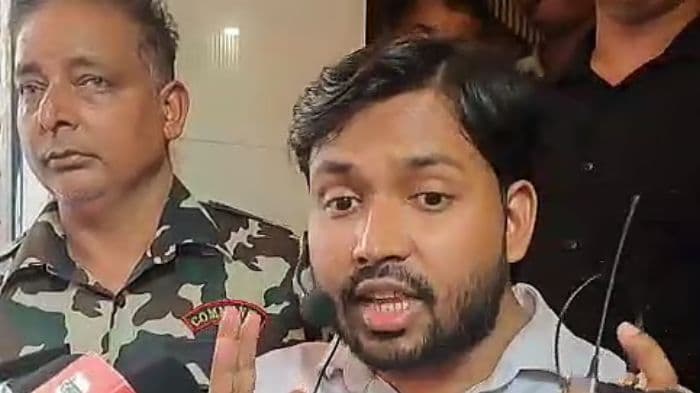

The perception that Patna-based educator and YouTuber Faisal Khan, widely known as Khan Sir, is “against India” or the “Indian government” generally stems from a few specific, high-profile controversies rather than a declared anti-national or anti-government stance.
As a massive public figure with over 25 million subscribers, his colloquial teaching style and opinions regularly put him under an intense public scanner. The friction usually boils down to a few distinct reasons:
1. Clashes with the Administration and Legal Cases
- The Coaching Firing Incident (June 2026): Khan Sir was recently named in a police First Information Report (FIR) in Patna following a violent clash outside his coaching institute, Khan Global Studies (KGS). After rival coaching members reportedly vandalized his center, Khan Sir’s bodyguards fired shots into the air. The bodyguards claimed they fired under his instructions, leading the Patna police to book him under provisions including abetment and the Arms Act. While the local court has granted him interim protection from arrest, the legal tussle with state law enforcement has played out very publicly.
- RRB-NTPC Exam Protests (2022): He was booked by the Bihar Police for allegedly inciting students to protest violently over irregularities in the Railway Recruitment Board (RRB) exams. While he maintained that he was trying to pacify students rather than instigate them, the friction with government agencies painted him, in the eyes of critics, as someone disrupting law and order.
2. Accusations of Ideological and Factual Bias
- Critiques from Right-Wing Media and Content Creators: Certain political commentators and nationalist YouTube channels frequently analyze his videos, accusing him of selectively targeting the ruling BJP government while being softer on opposition-ruled regimes.
- Historical and Geo-Political Narratives: Critics have pointed out instances where he presented questionable or simplified historical interpretations—such as his narratives on the Kashmir issue, Dr. B.R. Ambedkar’s legacy, or international conflicts like the Israel-Palestine issue. To his critics, these explanations seem designed to appeal to specific political sensibilities or go against standard state narratives.
3. Structural Critiques of Government Systems
- Critique of Government Policy: In his current affairs and educational videos, Khan Sir frequently uses raw, localized language to criticize government bureaucracy, unemployment rates, exam delays, and policy execution. While his followers view this as speaking truth to power on behalf of struggling students, critics view it as anti-establishment rhetoric.
4. Viral Snippets and Misinformation Backlash
- Old Videos Resurfacing: Because he produces a massive volume of content, old clips often resurface out of context or are called out for factual errors. For instance, an old video went viral where he inaccurately explained the constitutional roles of Cabinet Ministers versus Ministers of State. When such errors happen while discussing government functioning, it gives his detractors ammunition to label his content as a deliberate spread of misinformation against the system.
Summary
Ultimately, Khan Sir’s brand is built on being a populist educator who positions himself as a champion for low-income students trying to crack tough government exams. While his followers see his run-ins with the police and his sharp critiques of systemic delays as public service, his critics view his legal controversies, simplified history lessons, and anti-bureaucracy tone as a sign of being anti-government.
