

















































Staying active during pregnancy is incredibly beneficial. Regular, low-impact exercise can help reduce backaches, boost your energy, improve sleep, and build the stamina needed for labor. The American College of Obstetricians and Gynecologists (ACOG) generally recommends about 150 minutes of moderate-intensity activity per week for uncomplicated pregnancies.
Important Safety Note: Always consult with a healthcare provider (your OB-GYN or midwife) before starting or continuing any exercise routine, to ensure it is completely safe for your specific pregnancy.
Here are three highly effective, safe, and low-impact exercises commonly recommended during pregnancy:
1. Brisk Walking
Walking is one of the best cardiovascular exercises for pregnant individuals because it is gentle on your joints and requires no special equipment.
- Why it helps: It keeps your heart healthy, improves circulation, and helps maintain a healthy weight without jarring your knees and ankles.
- How to do it: Aim for a pace where your heart rate increases, but you can still comfortably carry on a conversation (the “talk test”). If you weren’t highly active before pregnancy, start with 10 to 15 minutes a day and gradually build up.
2. Prenatal Yoga (Specifically Cat-Cow Stretch)
Prenatal yoga focuses on stretching, mental centering, and focused breathing, which can be incredibly useful during labor.
- Why it helps: It relieves lower back pain, opens up the hips, and helps maintain flexibility.
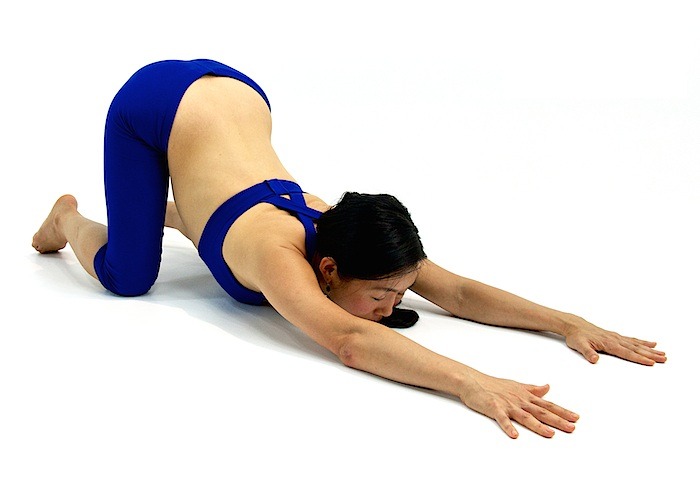
- How to do it: A foundational move is the Cat-Cow stretch on your hands and knees.
As shown in the image above, when moving into the “Cow” position (arching your back slightly), it is important to keep a neutral, supported spine and avoid over-stretching the belly or letting it drop too low. Then, transition to “Cat” by gently rounding your back toward the ceiling, tucking your chin toward your chest to relieve spine pressure.
3. Pelvic Floor Exercises (Kegels)
Your pelvic floor muscles support your bladder, bowel, and uterus. The extra weight of pregnancy can strain these muscles.
- Why it helps: Strengthening the pelvic floor supports the extra load of pregnancy, can make delivery easier, and helps prevent postpartum urinary incontinence (bladder leaks).
- How to do it: Squeeze the muscles you would use to stop the flow of urine. Hold the contraction for 3 to 5 seconds, then relax fully for 3 to 5 seconds. Aim for 3 sets of 10 repetitions daily. Note: Avoid doing this while actually urinating, as it can prevent your bladder from emptying completely.
Warning Signs to Stop Exercising Immediately
Listen closely to your body. Stop exercising and contact your healthcare provider right away if you experience:
- Vaginal bleeding or fluid leaking
- Dizziness, feeling faint, or shortness of breath before starting activity
- Chest pain
- Painful, regular uterine contractions
- Calf pain or swelling
