


















































The Illusion of “Forever”: The Unsettling Message Behind Aamir Khan’s Serial Marriages

MUMBAI — When Bollywood superstar Aamir Khan, 61, tied the knot with 47-year-old entrepreneur Gauri Spratt in July 2026, the PR machinery was quick to paint it as a heartwarming tale of finding love later in life. However, beneath the curated images of barefoot simplicity and intimate family gatherings, a growing chorus of cultural critics and fans are asking a more uncomfortable question: What message does a highly publicized string of marriages send to the youth?
While exaggerated internet rumors often accuse the actor of having four or five wives, the reality—three marriages and two highly visible divorces—still establishes a pattern of impermanence. For an actor who built his brand on playing principled, socially conscious characters, his personal life increasingly reflects a modern culture of disposability, leaving many to wonder if he is ever truly satisfied.
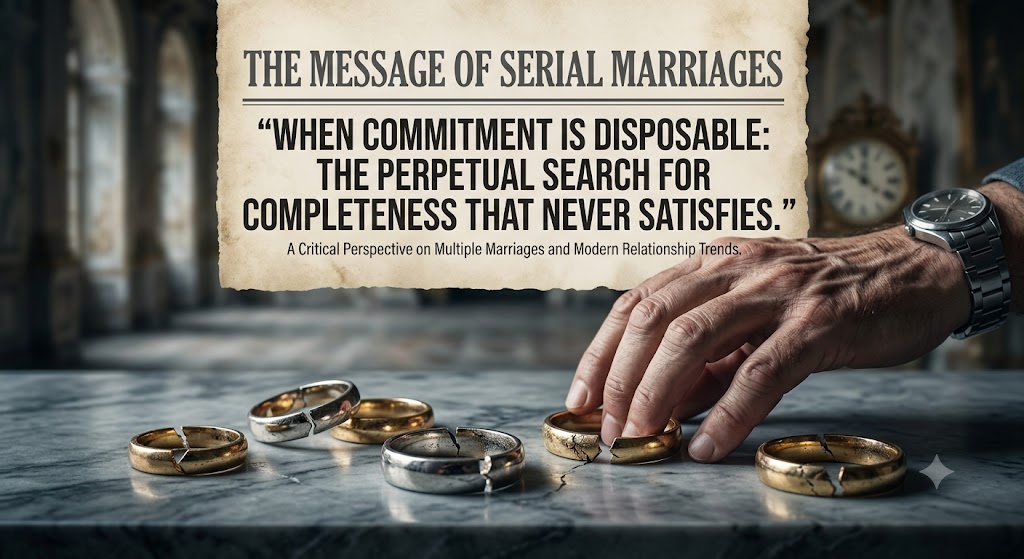
The “Perpetual Search” for Completeness
Following his recent wedding, Khan stated to the media, “Mujhe lagta hai ab jaake mai mukammal hua hoon” (I feel like I am finally complete now).
Critics were quick to point out the irony. Similar sentiments of ultimate fulfillment were expressed during his 16-year marriage to his first wife, Reena Dutta, and again during his 16-year marriage to filmmaker Kiran Rao. The recurring narrative of “finally” finding the right partner creates a cynical public perception: that marriage is no longer about weathering storms and growing together, but rather a temporary arrangement that can be discarded the moment one feels they have outgrown it.
If a cultural icon perpetually seeks a new “chapter” to feel whole, the youth watching him might internalize a damaging lesson—that dissatisfaction is always the partner’s fault, and the solution is to simply start over rather than do the hard work of repair.
The Erosion of Commitment and Stability
Khan’s defenders often point to his amicable divorces as a sign of maturity. He continues to co-parent successfully, and his ex-wives even attended his third wedding. However, normalizing “friendly divorces” can mask the genuine emotional toll that fractured family structures take.
The negative societal effects of normalizing serial marriages include:
- Devaluing the Vows: Marriage is traditionally built on the promise of enduring commitment through adversity. When public figures treat marriages as 15-year contracts that can be amicably dissolved when the spark fades, it severely dilutes the concept of long-term loyalty for younger generations.
- Family Fragmentation: Even the most “friendly” divorces uproot family dynamics. Blending families multiple times—Khan now navigates a family tree involving three different partners and children from various unions—normalizes a chaotic, shifting baseline of home life over stability.
- The Illusion of the “Upgrade”: It perpetuates a consumerist approach to relationships, subtly signaling to fans that if you feel unfulfilled in your 40s, 50s, or 60s, you can simply trade your current life in for a newer, fresher dynamic.
The Takeaway for the Youth
Celebrities hold immense soft power in India. While Khan is fully entitled to pursue his own happiness, the public legacy of his romantic life risks setting a bleak benchmark.
The underlying message young people might take from his journey is one of chronic restlessness—a belief that true satisfaction is an illusion always waiting in the next relationship, rather than something built and maintained in the current one. In a society already grappling with rising divorce rates and a fear of commitment, a superstar normalizing the “revolving door” of marriage may be a trend we should question, rather than celebrate.
